
Our work
Drones by application
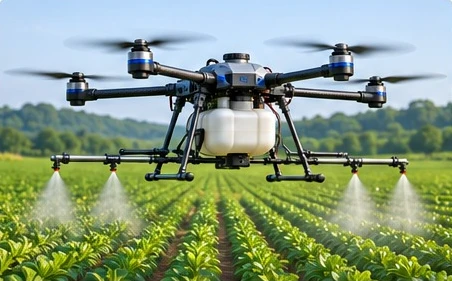 Agricultural drones
For crop spraying, start with the application rate and the area to cover between refills. Pump flow, nozzle spacing and flight speed must work together to deliver the target volume per hectare. Tank position also matters: as the payload drains, the aircraft must remain balanced.
What to specify
Crop and row spacing, application rate (L/ha), treatment area (ha) and liquid formulation.
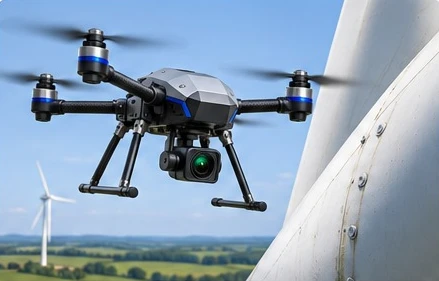 Inspection drones
For turbine blades, towers and plant equipment, the smallest defect you need to see determines the imaging requirements. Camera optics and working distance set the detail in each frame; gimbal stability and repeatable viewing angles make images easier to compare between inspections.
What to specify
Asset type, smallest feature to resolve (mm), safe stand-off distance (m) and required image or thermal data.
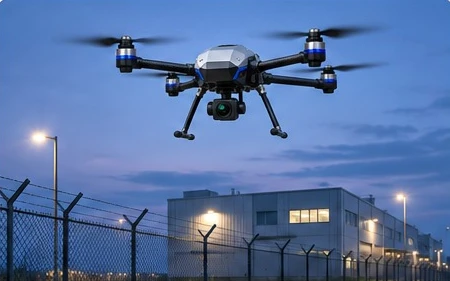 Surveillance drones
For industrial perimeter monitoring, camera selection starts with what the operator needs to distinguish at the farthest point on the patrol route. A wider field of view covers more ground but gives each target fewer pixels. Lighting, payload mass and the return leg all affect mission planning.
What to specify
Site dimensions, observation distance (m), day or night operation, nominal patrol time and video-link requirements.
Mechanical systems
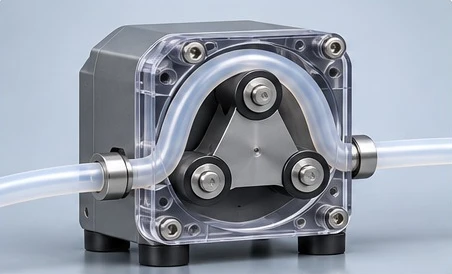 Peristaltic pump
For dosing or transferring fluids that must stay isolated from the drive, a peristaltic pump keeps the fluid path inside replaceable tubing. Tube bore and rotor speed set nominal flow; tube compression and discharge pressure affect delivery accuracy and tube life.
What to specify
Fluid and temperature, flow range (mL/min), discharge pressure, dosing tolerance and operating hours.
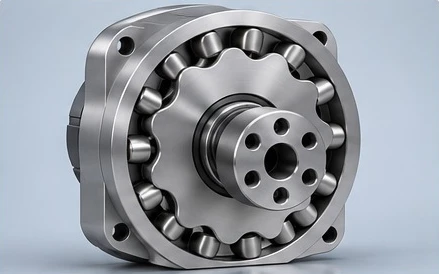 Cycloidal gears
For robot joints and rotary positioning axes, a cycloidal reducer combines speed reduction and torque transmission in a compact assembly. Selection depends on peak acceleration torque as well as running load. Bearing stiffness and lost motion matter when the axis reverses direction.
What to specify
Input speed (rpm), target ratio, continuous and peak output torque (N·m), allowable lost motion and mounting envelope.
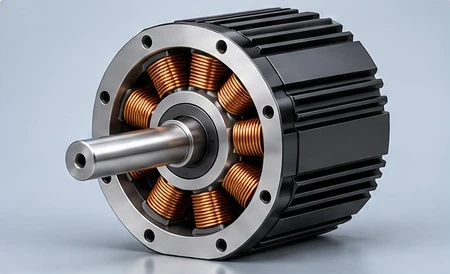 BLDC motors
For fans, pumps and motion axes, select a brushless DC motor against the load’s torque–speed curve. Winding selection must suit the DC bus and controller current limit. Cooling and duty cycle determine how much torque the motor can sustain, especially at low speed.
What to specify
Supply voltage, operating speed (rpm), continuous and peak torque (N·m), duty cycle, cooling and shaft interface.
LET’S BUILD WHAT’S NEXT